
Stories
Hear stories of what it's like to experience houselessness firsthand
The Most Vulnerable are Left Out
Our affordable housing shortage has a human cost, and our most vulnerable neighbors are paying the highest price. Kids grow up without stability. Older adults have nowhere to age with dignity. Thousands endure the daily trauma of life outside.
To help make sense of it, think about a game of musical chairs.
You have seven friends and seven chairs.
The music starts...
Then, the leader removes a chair, so now there are only six.
One friend, Mike, has a bad ankle and uses crutches.
When the music stops, everyone rushes for a seat.
But, Mike doesn’t get a chair.
Most people feel bad for Mike.
It seems unfair.
But the real problem isn’t Mike’s ankle.
The real problem is that there aren’t enough chairs.
When there aren’t enough chairs, the most vulnerable are the ones left standing.
The same is true for housing.











Robin Wall Kimmerer
Behind every number is a human being.
Here, you’ll hear stories of the housing affordability crisis, told by those living it. Each voice offers insight and asks only for yourattention.
Each story lasts between six or seven minutes. Take your time here. Listen. Listening is an act of care, a way of saying, “you matter.”
Content Note: The stories in this space may include references to difficult lived experiences alongside housing insecurity. Please take care of yourself as you listen.
When you’re ready, select a story to bring it to life.






Storytellers' systemic factors contributing to homelessness
With over half of the renters in the Portland area cost-burdened by rent, it’s not surprising that a rent increase or job loss can lead to homelessness. When you’re paying too much for rent, it’s impossible to save for an emergency.
In Multnomah County, an average of more than 1,000 evictions are filed in court every month, and over 90% of them are for nonpayment of rent. That number is only an unknown fraction of the total number of people who can’t afford to pay their rent. An eviction judgement is a significant barrier to renting another home, so many tenants will choose to move out rather than go through a court process they are unlikely to win.
Visit Evicted in Oregon for the latest eviction data.
Due to the combination of an inadequate social safety net and a lack of housing that is affordable to people with very low incomes, people who live with a disability like mental illness experience homelessness at higher rates than the general public. The trauma of homelessness can make mental health worse, making it even harder to end. For people who receive federal disability benefits, the amount is often not enough to pay for market rate housing in many urban areas.
People with serious mental illness and other disabilities may benefit from living in permanent supportive housing (PSH), which combines a rent subsidy with supportive services. Currently, there is not enough of this type of housing for everyone who needs it: Multnomah County alone needs almost 6,000 more PSH homes.
Learn more about behavioral health and homelessness.
One in five transgender people has experienced homelessness at some point in their lives. This is a much higher rate than the general population, due to discrimination in housing and employment, among other areas. Transgender people are also more likely to be unsheltered when homeless due to lack of supportive shelter options, and face more health and safety challenges when they are living outside. In the Portland area, the number of people who identify as “gender expansive” (which includes transgender people) increased 135% between regional data collection in 2023 and 2025.
Learn more about how housing insecurity and homelessness impacts transgender people.
As a result of centuries of racist policy and practice in the United States, people of color – especially Black and Indigenous people – are overrepresented in the homeless population. Though Black people make up about 12% of the nation’s population, they account for 37% of people experiencing homelessness and living in a shelter. Similarly, 1.3% of the population identify as American Indian or Alaska Native, but that group represents 3.4% of people experiencing homelessness and living in a shelter.
On the local level, the number of people who identify as BIPOC (Black, Indigenous and People of Color) almost doubled between regional data collection in 2023 and 2025, compared with a two-thirds increase for people who are white.
Learn more about racial disparities and homelessness.
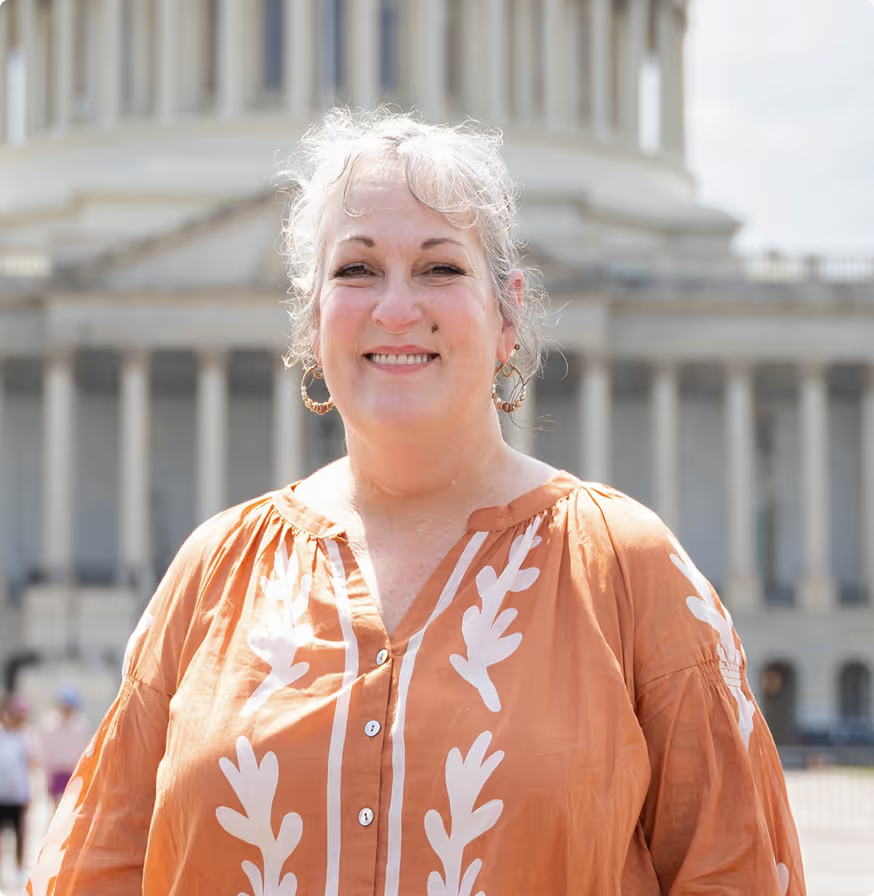
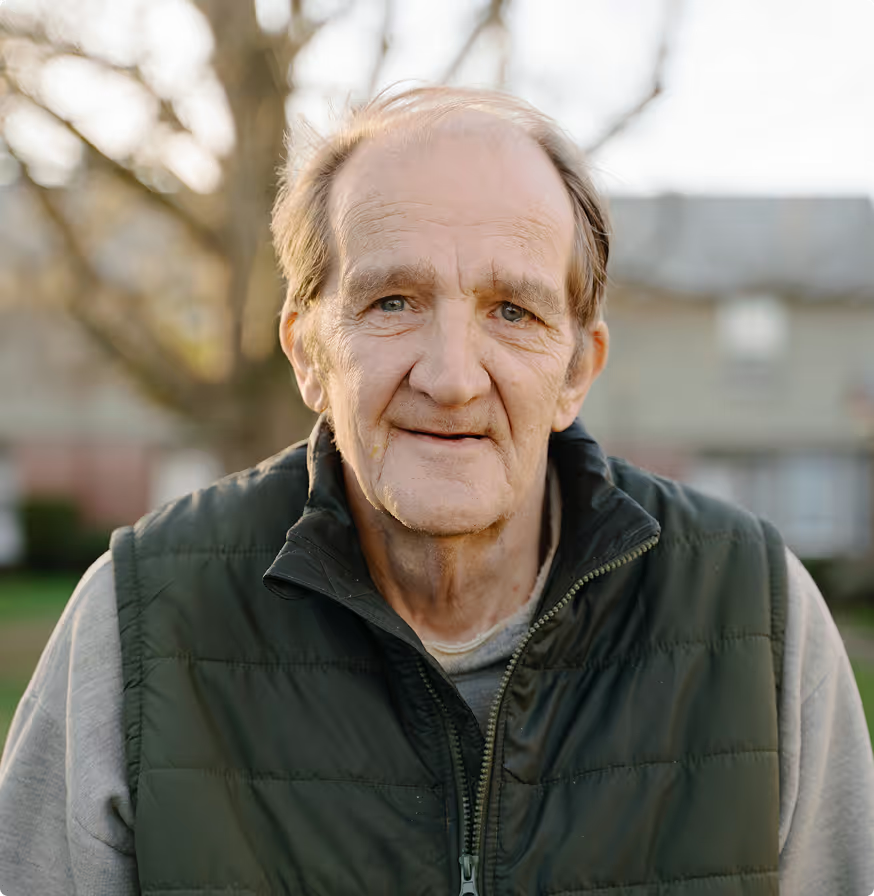
Here’s how stable housing has impacted three of our storytellers.

Listening is only the beginning.
Every story you’ve heard shows what’s possible when we build with care.
With love,